Menopause Insomnia: Why It Happens and How to Sleep Better
 Attah Oluchukwu Vivian
Menopause Insomnia: Why It Happens and How to Sleep Better
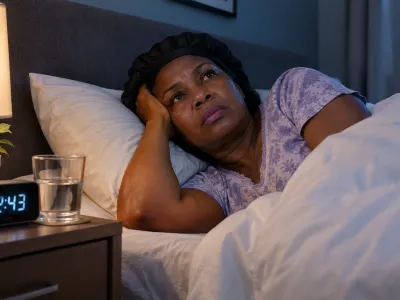
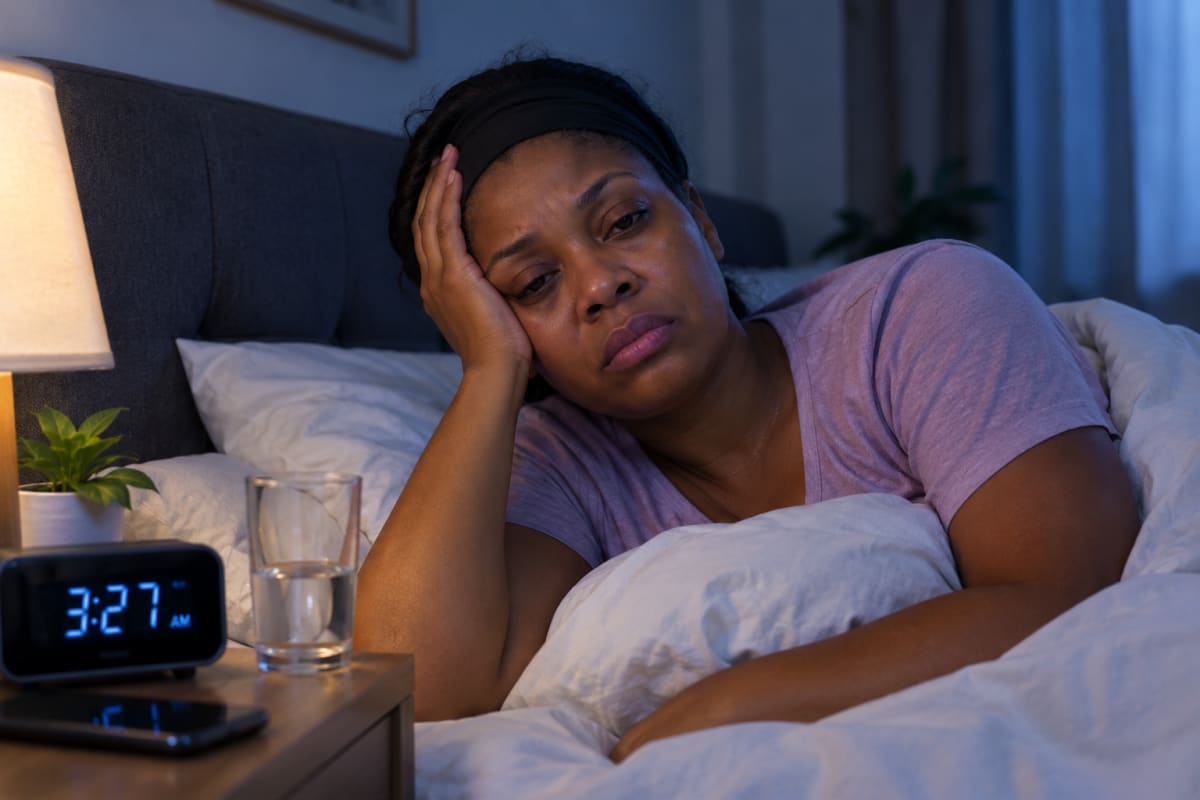
Somewhere in her late forties or fifties, almost every woman says some version of the same thing. I used to sleep fine, and now I don't know what happened to me. Some nights it's an hour of tossing before her brain finally lets go. Other nights, sleep comes easy enough, and then 3 a.m. shows up uninvited, heart beating a little fast, and that's it, no more sleep for her.
If that sounds like your life right now, you're not broken, and you're definitely not just getting old and cranky. There's an actual hormonal reason behind it. It has a name, menopause insomnia, and once you understand what's driving it, the whole thing feels a lot less scary and a lot more manageable.
For what it's worth, this isn't rare. Something close to half of women in perimenopause say sleep becomes a genuine problem, and once they're fully through menopause, that share climbs to somewhere around six in ten. So no, it's not just you, and it's not just stress either, though stress definitely doesn't help.
Why Menopause Wrecks Your Sleep
Nobody enjoys the biology lecture, but this part actually helps, so bear with me for a minute.
Estrogen does more than most people give it credit for. Among other things, it helps run your body's internal thermostat, and it plays a part in the brain regions tied to sleep. When estrogen drops, that thermostat starts glitching. That's more or less what a hot flash or a night sweat is, your temperature control short-circuiting at the exact moment you need it working properly.
Progesterone is the other big one. It works almost like a natural sedative, nudging a calming brain chemical called GABA. When progesterone falls, that nudge weakens, and that's a big part of why so many women describe lying in bed with a mind that simply will not switch off, even while their bodies are exhausted.
And then there's melatonin, quietly fading in the background anyway just from getting older, with menopause seeming to speed that fade up for a lot of women too. Three systems, all wobbling at once. Sleep is usually the first thing to feel it.
How to Tell It's Menopause Insomnia, Not Just a Rough Week
Everyone has a bad night now and then. This tends to be different because it's not one night, it's a pattern that keeps repeating itself.
Maybe it takes forever to fall asleep even though you're worn out. Maybe you fall asleep fine, and then you're staring at the ceiling at 2 or 3 a.m., unable to drift back off. Some women wake up soaked in sweat and then can't settle again afterward. Others are just up absurdly early, wide awake at half past four for no good reason at all. And running underneath all of it, a strange tired-but-wired feeling all day, exhausted enough to sleep and too jittery to nap.
If any of that has been true for weeks, not just after one stressful afternoon, it helps to name it properly. It gives you something concrete to work on instead of just gritting your teeth through it night after night.
How Long Does It Actually Last?
Honestly, nobody can give you an exact number here, and anyone who tries is guessing. For some women, things start settling down not long after their final period. For others, it drags on well into their sixties. What does seem to hold true is that sleep problems track closely with how intense the other menopause symptoms are, particularly hot flashes and night sweats, just as we explained in this article. Get those under better control, and sleep tends to follow.
What Actually Helps
If there's one thing sleep specialists tend to agree on, it's trying cognitive behavioral therapy for insomnia, known as CBT-I, before reaching for medication. It's not glamorous, and it doesn't fix things overnight, but it retrains the brain and body around sleep, and it has solid results behind it even when the insomnia is tied specifically to menopause.
Then there's the unglamorous stuff nobody wants to hear, the kind of advice that sounds too simple to actually work. A cooler bedroom, genuinely, if night sweats are part of your problem. Less caffeine after lunch, less wine in the evening, both of which quietly wreck sleep quality even when they don't feel like the culprit. Going to bed around the same time most nights. None of it is exciting. It works anyway, just slowly.
Hormone therapy is where things get more personal. When hot flashes and night sweats are the main thing dragging you out of sleep, menopausal hormone therapy, sometimes called MHT or HRT, tends to work well, because it addresses the actual cause rather than papering over it. It's not right for everyone, though. Starting it many years after menopause, or after age 60, tends to tip the risk-benefit balance the wrong way, which is exactly why this needs to be a conversation with a doctor who knows your full history, not a decision made off an article, mine included.
Melatonin gets overlooked more than it should. The prolonged-release version, in particular, has shown real promise for women in their mid-fifties and older. Worth bringing up with a doctor, especially if hormone therapy isn't the right fit for you.
And sometimes doctors reach for antidepressants, not necessarily because someone is depressed, but because certain ones happen to ease mood swings and sleep disruption at the same time during menopause. Again, not something to try on your own.
When to See a Doctor

If this has been dragging on for more than a few weeks, if your mood or your memory is taking a hit, or if you're even a little curious about hormone therapy, it's worth bringing it to a doctor, ideally a gynecologist or someone who actually specializes in menopause. You will not be the first patient to sit down and say I just can't sleep anymore, believe me. Bringing a rough log of your nights, bedtime, wake time, and whatever woke you up, tends to make that appointment far more useful than trying to describe it from memory.
Frequently Asked Questions
Does menopause insomnia ever go away on its own?
Sometimes, yes. Once hormones settle into their new normal, some women find sleep evens out again without doing anything special. Others need real treatment to get there. Either way, you don't have to just wait it out for years if it's wrecking your day-to-day life right now.
Can hormone therapy really fix my sleep?
Often, yes, especially when hot flashes and night sweats are the main culprits, since it's treating the root cause rather than just the symptom. Whether it's right for you depends on your age, how long you've been in menopause, and your broader health history. That's a decision for you and your doctor together, not something to settle from a search result.
What's the fastest natural way to fall asleep during menopause?
There's no magic trick here, much as I wish there were one. Cooling the room down, cutting caffeine after lunch, and keeping a consistent bedtime tend to help the fastest. CBT-I works better over time, but it takes a few weeks to show results, so don't expect an overnight miracle.
Is melatonin safe to take for menopause insomnia?
For most healthy women, short-term use is considered safe, and the prolonged-release version has decent evidence behind it for women over 55. Still worth checking with a doctor first, particularly if you're already on other medication.